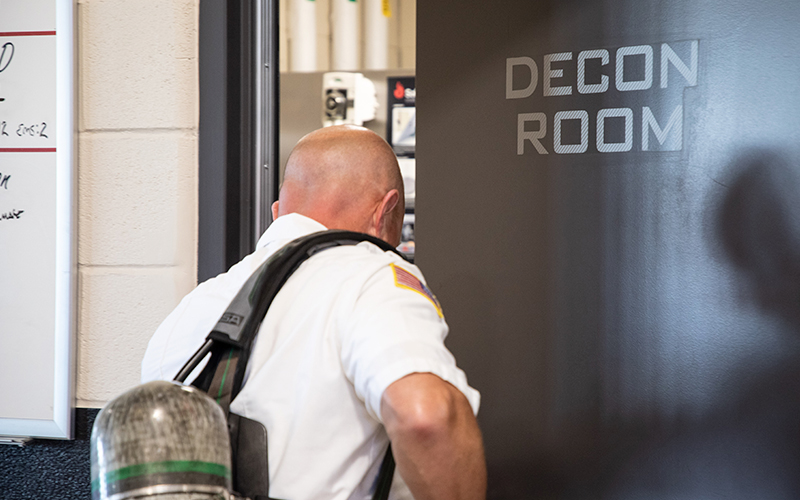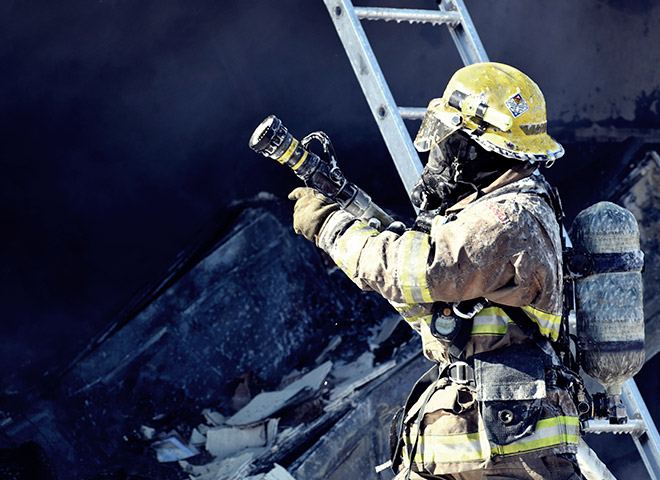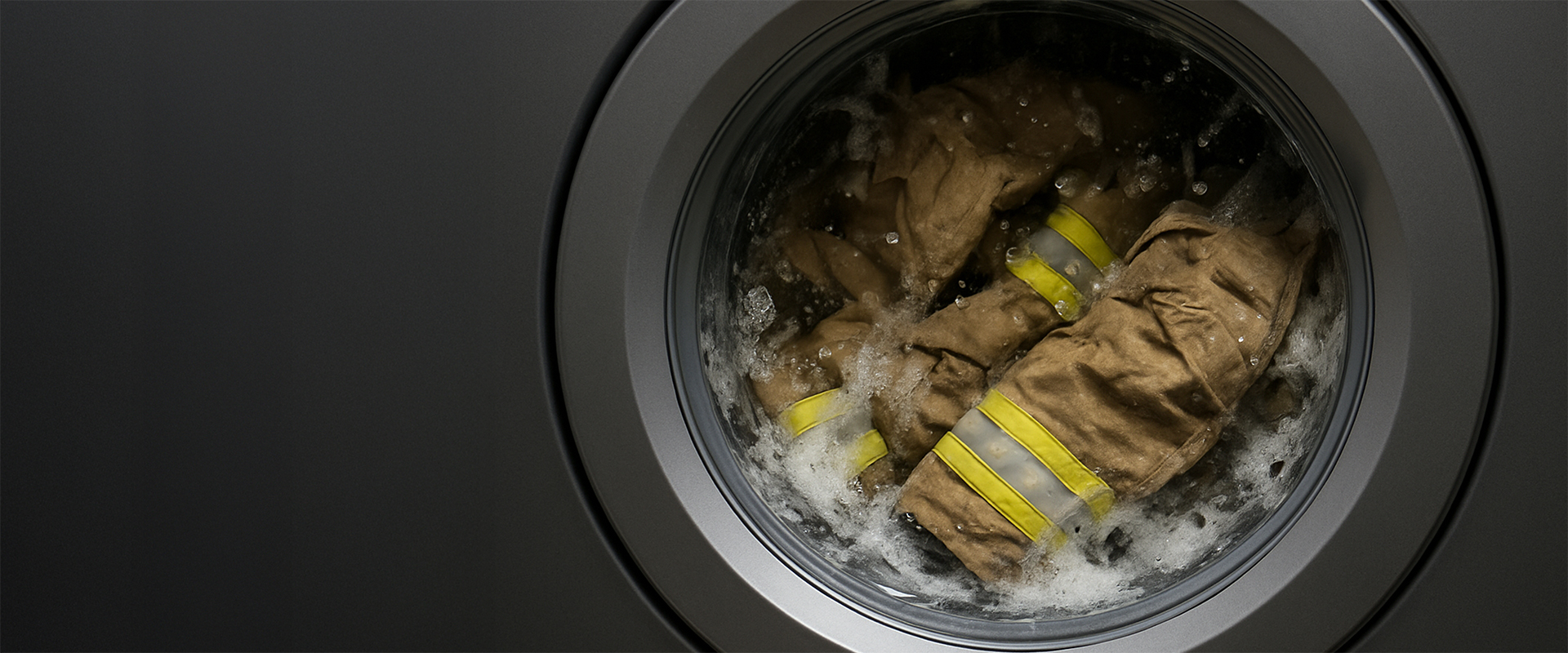


A well-designed decontamination workflow is vital for firefighters’ health and safety. By dividing facilities into Red, Yellow, and Green Zones, stations can eliminate cross-contamination, ensure compliance with NFPA standards, and protect personnel from hazardous exposures. Below, we break down the essential zones and key equipment needed for an optimized setup:
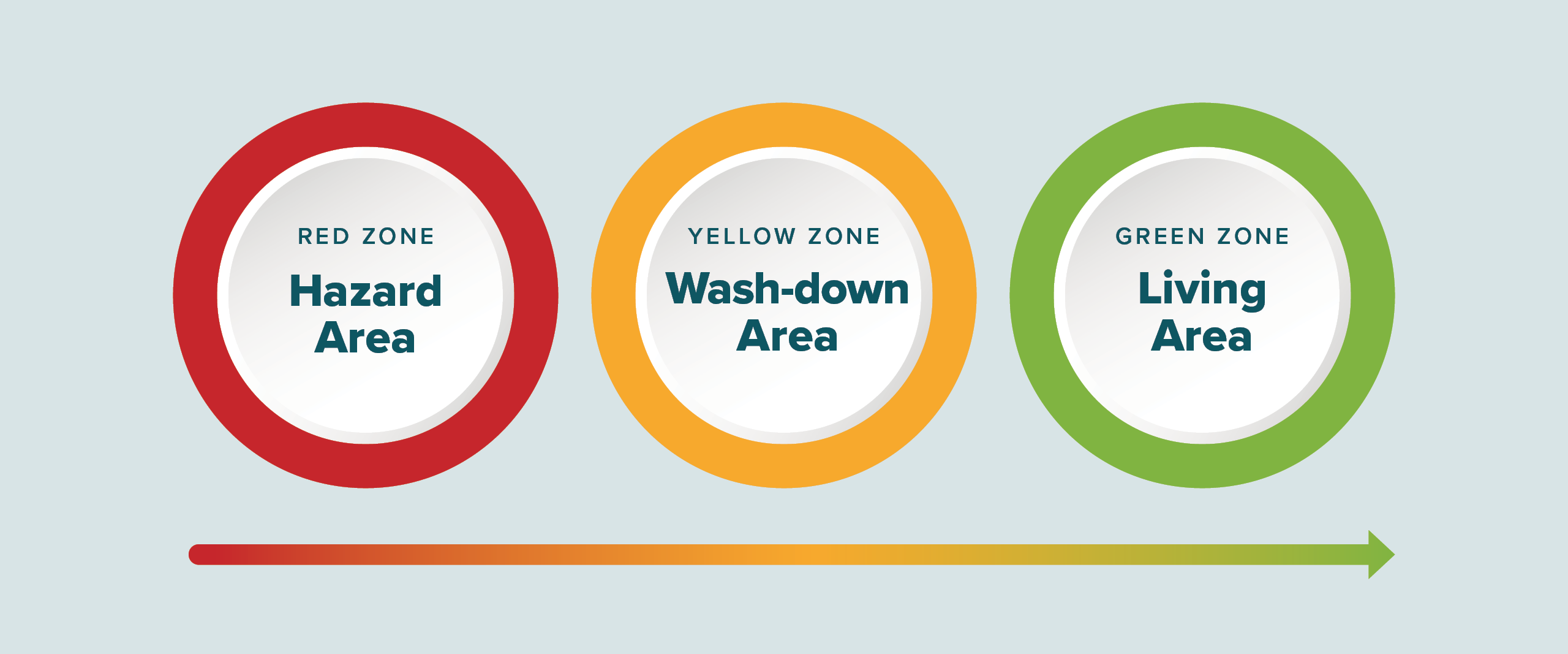
Remember to divide the cleaning/washing area into contaminated and clean spaces.
Red Zone
The red zone (hot zone) includes spaces likely to be exposed to contaminants or carcinogens. This includes the area where contaminated gear or equipment is first brought into the station, such as the bay area where fire trucks and apparatus are parked, and the area used for the decontamination procedures of contaminated PPE.
The red zone is the primary point where potentially contaminated items from the field (e.g., PPE, tools, and equipment) are initially handled and stored. The potential for contamination from carcinogens, soot, and hazardous materials is highest in this area.
Facilities in the red zone:
The facilities required in the red zone vary depending on the type of equipment being decontaminated, as both the procedures and the equipment used can differ. Below are examples of facilities that may be required:
- Storage for Contaminated Gear – Temporarily store decontaminated gear
- Work sink and scrubbing stations – For situations where gross decon, or preliminary exposure reduction has not been made on the scene it is good to have an area for this at the station or training facility.
Washing equipment in the red zone:
- Presoaking tanks for breaking down contaminants
- Washer extractors for PPE cleaning
- SCBA and gear washers for helmets, gloves, and boots
- Filtering systems for safe wastewater disposal
- Drying cabinets for drying PPE
- Storage for contaminated gear
The red zone is the primary point where potentially contaminated items from the field (e.g., PPE, tools, and equipment) are initially handled and stored.
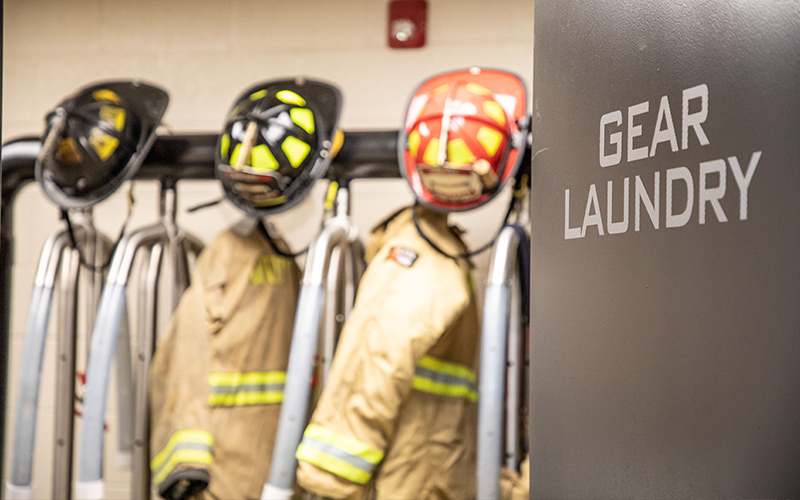
Presoaking tanks
When cleaning turnout gear it is strongly recommended to perform pre-soaking before proceeding with the laundering process. This involves submerging the PPE in a tank containing a solution of water and detergent.
Research indicates that pre-soaking is highly effective in removing a significant percentage of PAHs1. Furthermore, they show that the duration of pre-soaking directly impacts its effectiveness; the longer the gear is soaked, the greater the percentage of PAH removal.
Given its efficiency, pre-soaking should be incorporated into the cleaning process whenever possible to maximize decontamination and ensure the safety and longevity of the PPE.
PPE Washer Extractors
Due to the sensitive nature of the materials in turnout gear and their layered construction, improper cleaning, such as excessive agitation, inappropriate detergents, or incorrect wash temperatures, can damage fabrics, weaken seams, and degrade performance.
To address these concerns, a dedicated washer extractor designed specifically for PPE is essential. It is recommended to choose a machine that features programmable settings that allow departments to tailor each wash cycle to the specific needs of firefighting textiles. You should be able to change settings such as mechanical action, water temperature, and cycle time to accommodate the fragility of each layer. It is also important that the system limits G-forces during spin cycles, helping preserve seam integrity and fabric construction, which is vital for maintaining compliance with standards such as NFPA 1850.
Equally important is the practice of washing outer shells separately from inner components like moisture barriers and thermal liners. Washing these layers together can lead to cross-contamination and uneven cleaning and may even cause damage due to differences in material sensitivity. By washing components individually, departments ensure that each piece receives the appropriate treatment, reducing wear and extending the gear’s functional life.
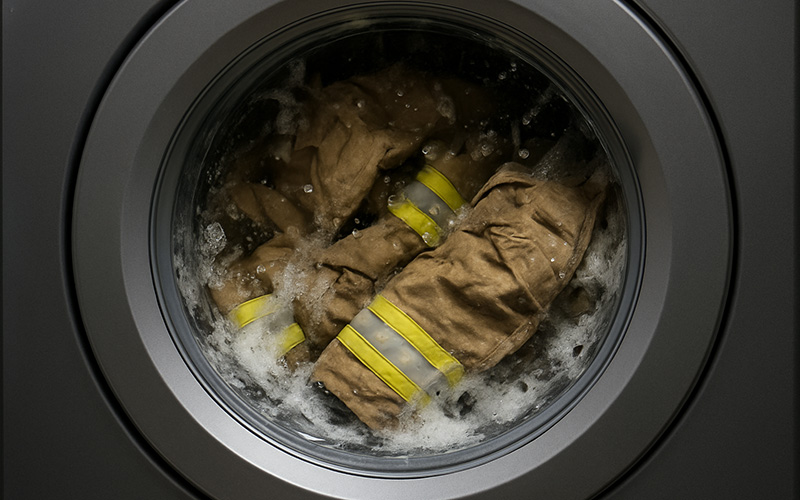
Residential Style Washing Machines
As mentioned before, studies show that contaminants can infiltrate every layer of PPE, from bunker gear to station uniforms2 so it is just as important to wash them as it is to wash the bunker gear. However, because of the risk of cross-contamination this should not be done in the same machine. Instead, it is recommended to use separate residential style washing machines for this purpose.
Automatic SCBA and Gear Washers
One of the most critical pieces of equipment to decontaminate after a fire response is the self-contained breathing apparatus (SCBA). Without effective cleaning, these contaminants can remain on the surface or accumulate in seals, valves, and crevices, posing a long-term exposure risk to personnel.
Manual cleaning methods such as hand scrubbing or rinsing often fail to adequately remove embedded particles, especially from hard-to-reach areas. It is also inherently inconsistent; results can vary significantly depending on the individual performing the task, their technique, the amount of time spent cleaning, and their physical condition. Fatigue also becomes a factor, especially when a single person is responsible for cleaning multiple SCBAs after an incident.
Manual cleaning methods such as hand scrubbing or rinsing often fail to adequately remove embedded particles ...
In contrast, SCBA washers offer a consistent, repeatable process that reduces variability and improves cleaning outcomes. Once programmed, the machine delivers the same level of targeted cleaning with each cycle, regardless of the number of units processed. This standardization ensures that each piece of equipment meets the same decontamination threshold every time, helping departments comply with exposure-reduction protocols and minimize health risks.
SCBA washers are also referred to as gear washers or decon washers. This terminology stems from their versatility, as many of these machines are equipped with accessories that facilitate the efficient and thorough decontamination.
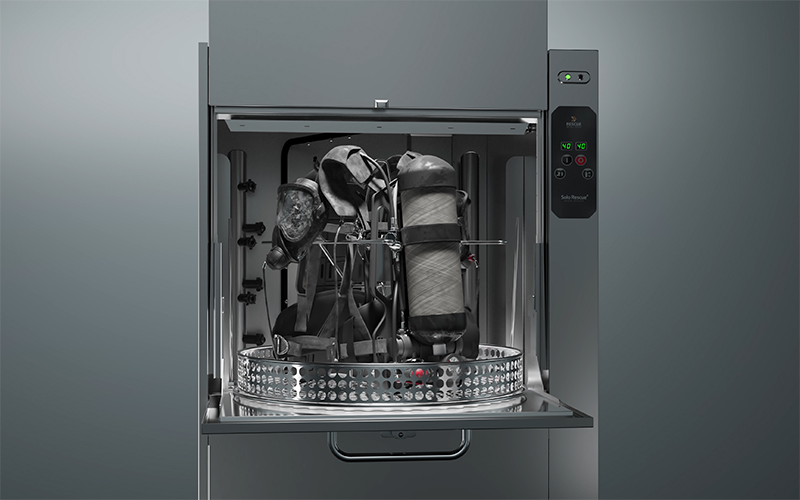
Solo Rescue® SCBA washer.
Filtering systems
During the decontamination process, toxic chemicals are released from contaminated equipment. As our understanding of these substances and their harmful effects continues to grow, so does the urgency to prevent them from entering our ecosystems. Collecting, filtering, and safely disposing of these hazardous materials is no longer optional for fire departments – it has become a critical responsibility. Discharging these contaminants into the public sewer system is increasingly unacceptable, making the inclusion of optimized filtering systems an essential consideration when designing a decontamination room.
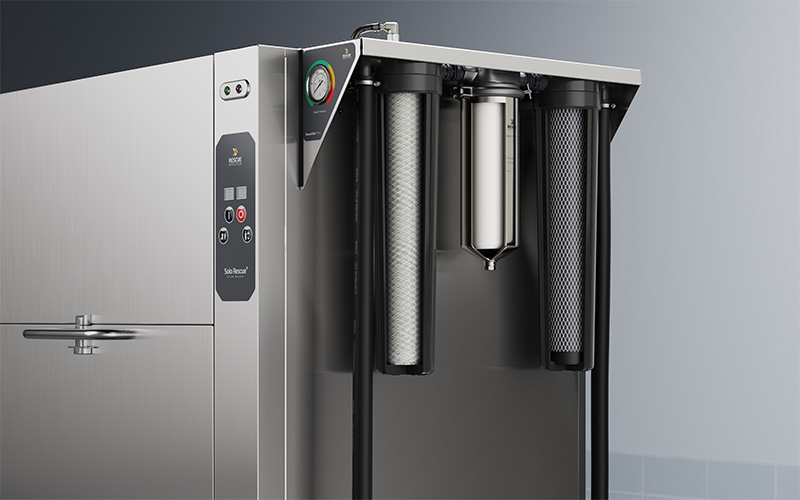
DeconFilter™ Pro S, optimized filtration technology.
Drying Cabinets
An often-overlooked component of the decontamination process is the potential for cross-contamination during drying. Although one could argue that the drying process technically could be part of the yellow zone it is in fact still considered to be a part of the red zone. However, to preserve the integrity of the cleaning process, it is essential that drying areas are physically separated from other parts of the red zone such as rooms where the decontamination takes place or operational bays.
Drying firefighter PPE is a critical final step in the decontamination process, and selecting the appropriate drying method helps preserve the integrity of turnout gear while ensuring it’s safely returned to service.
Cabinet-style dryers use temperature-controlled airflow and static drying forms to gently dry gear without mechanical agitation. Garments are hung on specialized fixtures that promote even airflow across all layers, including inside sleeves, boots, and gloves. This method reduces mechanical stress and helps preserve the structure of moisture barriers, thermal liners, and outer shells. These systems are typically programmable and equipped with humidity sensors that adjust airflow and stop the cycle once optimal dryness is achieved, helping to prevent over-drying and material fatigue.
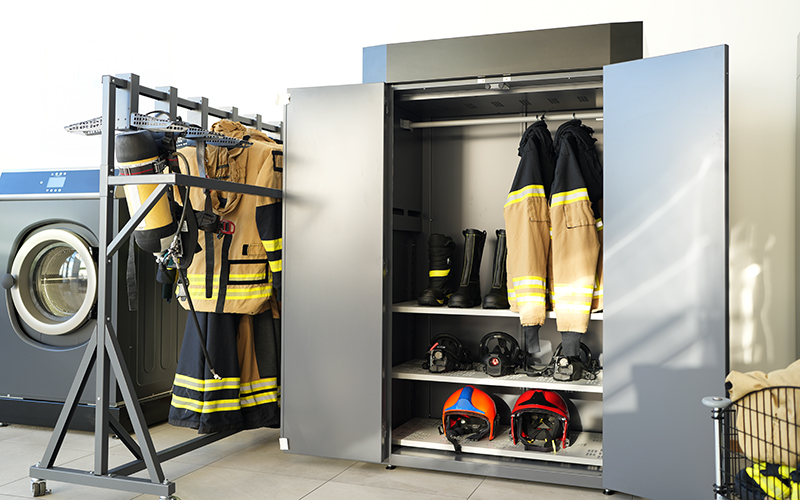
Our drying cabinets are available in 18 lbs and 44 lbs.
Storage
Once the PPE has been decontaminated proper storage is essential. When not in use, PPE and firefighting equipment should be stored in an enclosed and ventilated locker or in an enclosed area of the apparatus floor that prevents exposure to contaminants or UV light.
Yellow Zone
The yellow zone (warm zone) serves as the transition area between the contaminated red zone and the clean green zone. This critical area should be equipped with restroom and shower facilities, allowing personnel to clean up thoroughly before entering the green zone. Properly designed yellow zone facilities help minimize the risk of cross-contamination and ensure the continued safety and hygiene of staff and the clean areas of the fire station.
Green Zone
The green zone (cold zone, clean area) in a fire station is designated as the cleanest area, free from contamination. It includes areas such as living room, kitchen, dormitory and so forth. The air pressure in the green zone shall be higher than areas leading into it to prevent airborne contaminants from travelling into it. All PPE and firefighting equipment should be kept away from the green zone.